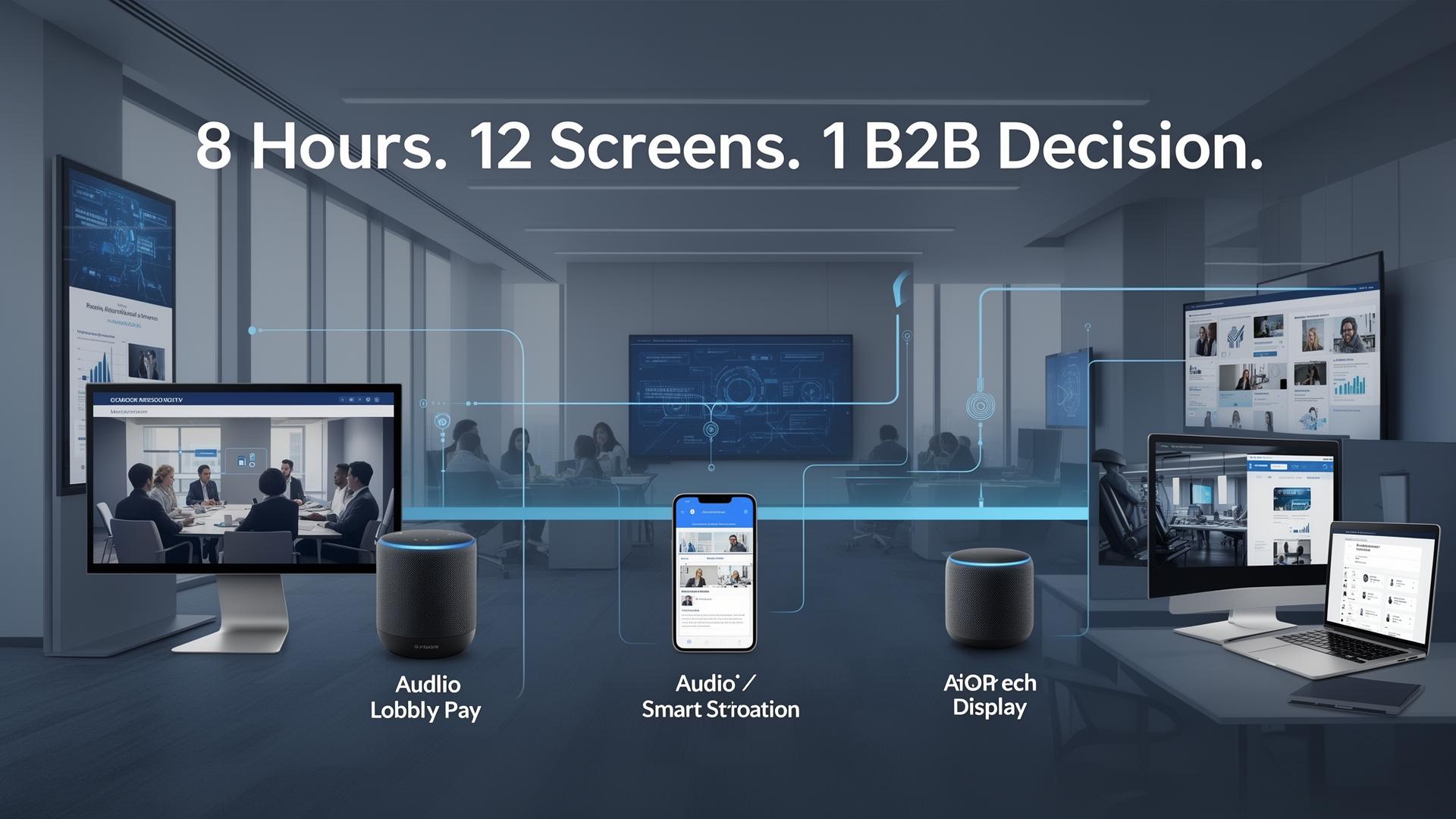
8 Hours. 12 Screens. 1 B2B Decision.
In B2B marketing, decisions are rarely made in a single moment. They are shaped quietly, over hours, across screens, through repeated exposure in environments where work actually happens.
As connected offices become more digitally enabled and hybrid work patterns stabilise, the workplace has emerged as one of the highest-intent media environments for B2B brands.
To understand why connected office advertising works, it helps to step away from formats and platforms, and instead follow a real workday.
Morning: Attention Without Interruption
The workday begins before the desk. As professionals enter office buildings, coworking spaces, or corporate campuses, they move through lobbies, elevators, and shared spaces where digital screens are already part of the environment.
A brand message appears briefly, clear, relevant, and contextual. There is no action taken. No intent yet. But attention has been earned naturally, without disrupting workflow.
This is the first screen. And it matters more than it seems.
Mid-Morning: Familiarity Takes Shape
Once at their desks, professionals shift into focused work, emails, documents, dashboards, meetings. During these moments, they encounter additional brand touchpoints on nearby screens, desktops, or shared digital surfaces.
The message feels familiar now. Not because it is repetitive, but because it is consistent.
This is where connected office advertising differs from traditional digital media. Instead of competing for attention in crowded consumer environments, it builds recognition inside professional contexts where relevance is higher and distractions are fewer.
Midday: Passive Exposure Still Builds Recall
Lunch breaks, common areas, and waiting zones introduce moments of semi-attention rather than active engagement. Connected TVs and office screens play business news, updates, or ambient content.
When a B2B brand appears here, it benefits from something rare: unforced visibility. The viewer isn't scrolling past. They are present, but unpressured.
Over time, this passive exposure builds credibility and recall, two critical drivers in long B2B buying cycles.
Afternoon: Context Drives Relevance
As the day progresses, mobile usage increases. Short breaks between meetings. Quick research moments. Light scrolling.
Here, mobile placements reinforce earlier exposure, often with more specific messaging aligned to professional needs.
By now, the brand feels known. The message feels contextual.
This isn't coincidence. It's sequencing.
Connected office advertising works because it allows brands to appear across multiple devices within the same professional environment, rather than chasing users across unrelated contexts.
Evening: Reinforcement Without Fatigue
As professionals transition out of work mode, commuting, listening to podcasts, or engaging with audio content, audio placements offer one final reinforcement.
No hard sell. No urgency. Just consistency.
By the end of the day, the brand is no longer unfamiliar. When the buying journey eventually begins, recognition already exists.
What Actually Influenced the Decision?
Across eight hours, a professional may encounter a brand through:
Individually, none of these moments feel decisive. Collectively, they shape perception.
This is how twelve screens quietly influence one B2B decision—not through interruption, but through presence.
How Visora Enables This Connected Office Journey
Visora's role in this ecosystem is not to push messages harder—but to connect them intelligently.
OfficeAdPro is Visora's workplace targeting layer—built to identify commercial environments (often with ~10 connected devices) and help B2B brands show up where professional intent is naturally highest.
By unifying DOOH, Connected TV, mobile, and smart speaker formats into a single, workplace-focused advertising ecosystem, Visora enables brands to:
All of this happens without reliance on third-party cookies—making the approach future-ready as privacy standards evolve.
In Visora campaigns, cross-device delivery has been associated with 85% higher brand recall versus single-device targeting.
Why This Matters for Modern B2B Marketing
B2B buyers don't respond to impulse. They respond to:
Connected office advertising aligns with how decisions are actually formed—over time, across moments, within professional contexts.
As offices become more connected, these environments are no longer peripheral to B2B strategy. They are central.
Conclusion: The Workday Is the Media Plan
The most effective B2B advertising today doesn't dominate attention—it respects it.
By appearing across the workday, across screens, and across moments of professional focus, brands can influence decisions long before a sales conversation begins.
That is the real impact of connected office advertising.
And that is the shift Visora is helping lead.