
3.5x.
That's the difference in engagement when a campaign targets an entire household versus a single user. Not a marginal lift. Not an incremental gain. Three and a half times more engagement, because the ad reached the family, not just a device.
That number sits at the centre of every decision we made when building Visora. Most ad platforms are built around devices. Visora was built around households.
Here's why that distinction changes everything about how your campaign actually performs.
Your Family Looks Like Five Strangers to Most Platforms
A household in Pune. Smart TV in the living room streaming an OTT platform. Father listening to a news podcast on his phone during the commute. Mother playing a Tamil playlist on the smart speaker while cooking. Daughter on her phone after college. Son gaming on a tablet.
Five screens. Five device IDs. Five independent frequency counters.
One family.
A campaign capped at five impressions per "user" doesn't reach this family five times. It reaches them closer to twenty, five per device, with the smart speaker invisible entirely. That's not reach. That's budget on repeat.
And here's the part that doesn't show up in your report: the family is making purchase decisions together. Which car. Which insurance. Which FMCG brand. These are household decisions shaped by collective exposure across the day, not individual decisions made by individual device IDs.
When you target the household as one unit, engagement multiplies by 3.5x. When you target devices separately, you're paying more to achieve less.
*"Every device you can't connect to a household is a frequency cap you can't enforce and a rupee you can't account for."*
You're Still Buying Media Like It's 2015
Digital advertising was built on a one-device-one-person assumption. Desktop cookies made that roughly true. Mobile complicated it but didn't change the core logic — platforms just added device IDs and kept the same architecture.
Now look at an Indian urban household in 2026. A smart TV. Two to four smartphones. Increasingly a smart speaker. The screens have tripled since that architecture was designed. The family behind them hasn't.
The consequences are hiding in plain sight:
Your reach is overcounted. One household shows up as four or five "unique users" across platforms. The campaign report says 2 million reached. Reality might be 600,000 households seeing your brand too many times.
Your frequency caps don't actually work. A cap of 5 per device means 15–20 per household. That's not brand building. That's saturation — and saturation doesn't convert. It fatigues.
Your budget leaks silently. You're paying to reach the same family through CTV, then again through mobile audio, then again through in-app display, each counted as a fresh impression on a separate line item. Same household. Three invoices.
This isn't a Visora-specific finding. It's a structural problem with how device-first campaigns work. We just chose to build a platform that refuses to ignore it.

We Chose the Household. Here's What That Actually Means.
When we built Visora, we had a choice: layer on top of existing device-level infrastructure — faster to market, easier to explain — or rethink the fundamental unit the entire platform operates around.
We chose the household. Not the device. Not the cookie. Not the individual profile.
*"Advertising has spent two decades optimising for screens. We asked a different question — what if we optimised for the family behind them? The moment you make that shift, everything changes: how you target, how you measure, and how much of your budget actually works."* — Saurabh, Founder: Visora
In practice, Visora connects the screens inside a home — the CTV, the phones, the smart speaker — into a single household identity. Every campaign decision flows from this:
Targeting asks: which households should see this campaign?
Frequency asks: how many times has this household been reached across ALL its screens?
Measurement asks: how many unique households did we actually touch?
The result: campaigns on Visora deliver a 14% higher conversion rate. Not because the creative is different. Not because the audience is different. Because the campaign is reaching the right household the right number of times across the right screens — instead of blasting the same family through every device it owns and calling it scale.
For a deeper look at how this connected household model works in practice, our earlier blog on cross-device targeting breaks down the mechanics.
The Hours Your Brand Disappears
Here's the part most campaigns miss entirely: screenless moments.
Smart speakers are one of the fastest-growing device categories in Indian homes. Families use them for devotional music at 6 AM, news at breakfast, recipes while cooking, ambient playlists through the afternoon. Audio streaming across platforms runs deep, and these are some of the highest-attention moments in a consumer's day. No competing screens. No split attention. Just the listener and the message.
But most advertising platforms can't see smart speakers at all. They exist outside the device-ID ecosystem that screen-based platforms rely on.
When your platform thinks in devices, those moments are invisible inventory. When your platform thinks in households, they become part of the home's media footprint — another touchpoint where the brand stays present when screens are off but ears are open.
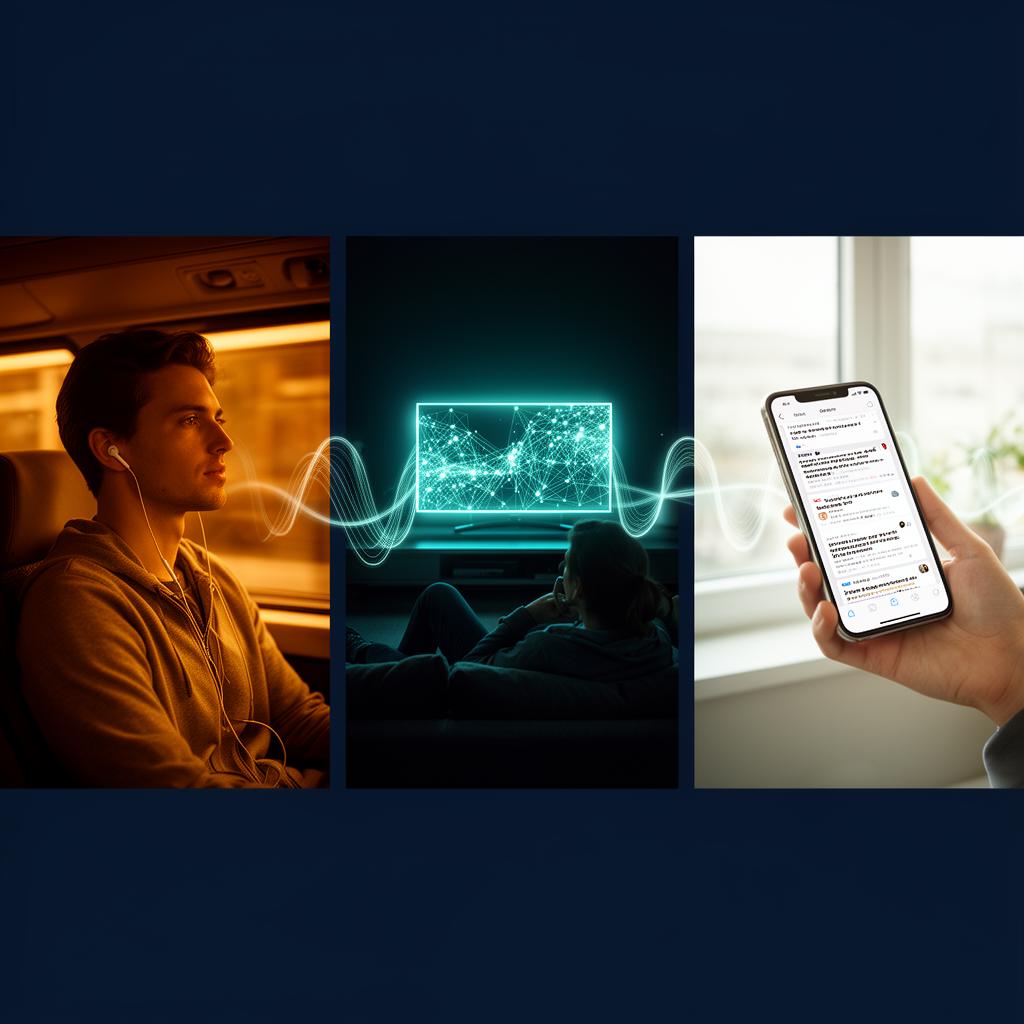
Visora's platform connects these screenless moments to the household graph. Your brand doesn't vanish the moment someone puts their phone down. It follows the family's attention — from the CTV in the living room to the speaker in the kitchen to the earphones on the commute — as one continuous presence, not three disconnected campaigns.
That continuity is a major reason household-targeted campaigns see 3.5x the engagement. The brand isn't just showing up more often. It's showing up in the moments that matter, across every screen and speaker the family uses throughout the day.
The Three-Question Household Audit
Before you evaluate any platform, including ours, ask your current campaign these three questions:
**One:** How many of your "unique users" are actually the same household? If your platform reports device-level reach, divide by 3–4 for a rough household estimate. The gap between those numbers is your overcounting.
**Two:** What is your true household frequency — across all screens, all channels? Add up impressions across CTV, mobile, audio, and display for the same household. If you can't do this in one dashboard, you don't have a frequency number. You have separate guesses.
**Three:** How many waking hours per day is your brand completely absent from the household? If you're not present on smart speakers and mobile audio, your brand exists for roughly 4–5 hours of active screen time and goes silent for the remaining 10–12 waking hours. That silence is a gap your competitors will fill.
*"If you can't answer these three questions from one dashboard, your frequency is a guess and your reach is a wish."*
What This Means for Your Next Campaign
The shift starts with one question. Not "how many devices did we reach?" but "how many households did we reach, and how many times did each one encounter our brand across their entire day?"
That's the question Visora was built to answer — across CTV, mobile, audio, and smart speakers, in one campaign, with one frequency cap, and one number you can trust.
The data backs it up: 3.5x higher engagement. 14% higher conversions. Not from spending more — from reaching smarter.
If you want to see what your current campaign looks like through a household lens — including where frequency is leaking and where your brand goes silent — let's run the audit together.